

If you are wondering what date it was three weeks ago, the answer is Monday, October 5, 2026. When today’s date is October 26, 2026, counting backward by three full weeks takes you exactly 21 days into the past.
It is a simple calculation, but knowing the precise date can be surprisingly helpful when you are checking an appointment, reviewing an old message, tracking a deadline, or remembering an important event.
The 3 Weeks Ago From Today calculation also offers a useful way to understand the calendar. October 5 falls in October, belongs to the 41st ISO calendar week, and is the 278th day of 2026. These details make it easier to connect a specific date with the wider calendar year.
Whether you need a quick answer or want to learn how a date calculator works, this guide explains the result, the mathematics behind it, and practical ways to calculate past dates accurately.
| Details | Answer |
|---|---|
| Today’s Date | October 26, 2026 |
| 3 Weeks Ago | October 5, 2026 |
| Day of the Week | Monday |
| Total Weeks | 3 Weeks |
| Total Days | 21 Days |
What Is 3 Weeks Ago From Today?
Three weeks ago from October 26, 2026, was Monday, October 5, 2026. Since one week contains seven days, three weeks represent 21 days. Subtracting those 21 days from the current date gives the exact result without requiring any complicated calculations.
Here are the essential details at a glance.
| Calendar detail | Answer |
|---|---|
| Current date | Monday, October 26, 2026 |
| Date 3 weeks ago | Monday, October 5, 2026 |
| Duration | 3 weeks |
| Total days | 21 days |
| Day of the week | Monday |
| Month | October |
| Year | 2026 |
| ISO week number | 41 |
| Day of the year | 278th day |
| Days remaining after October 5 | 87 days |
| Year completed by October 5 | Approximately 76.16% |
These details follow the Gregorian calendar, the standard calendar used in most international date calculations. Notice that both dates fall on a Monday. That happens because subtracting a whole number of weeks preserves the day of the week, which is one of the easiest ways to double-check your answer.
How to Calculate 3 Weeks Ago From Today
Calculating a past date is easier when you break the process into small steps. You don’t need a special application or advanced mathematical knowledge, just a calendar and a clear starting date.
Step 1: Identify Today’s Date
Start with the current date, which in this example is October 26, 2026. The starting date matters because the answer changes every day. A calculation performed tomorrow will produce a different result.
Step 2: Convert Weeks Into Days
A standard calendar week contains seven days. Multiply the number of weeks by seven to find the total number of days.
3 weeks × 7 days = 21 days
This conversion is the foundation of the calculation. Once you know the number of days, subtracting the duration becomes straightforward.
Step 3: Subtract 21 Days
Count backward from October 26, 2026. Going back 26 days would take you into September, but you only need to move back 21 days.
October 26 minus 21 days equals October 5, 2026.
The result is Monday, October 5, 2026. Because October has enough days to accommodate this subtraction within the same month, there is no need to cross into September.
Step 4: Verify the Result
Check a calendar or use an online date calculator to confirm the date and weekday. This extra step is useful when working with travel bookings, application deadlines, school records, or other situations where an incorrect date could create confusion.
A quick mental check also works: October 5 plus three weeks equals October 26. Moving forward and backward by the same number of days should return you to the original date.
What Date Was 3 Weeks Ago From Today?

The question What Date Was 3 Weeks Ago is a common calendar query, especially when someone remembers an event by its approximate timing rather than its exact date. The answer depends on the date from which you begin counting.
For October 26, 2026, the answer is October 5, 2026. This is the date exactly 21 days earlier, not simply a date that falls somewhere in the previous month.
For example, imagine that you received an email three weeks ago and want to locate it in your inbox. Instead of checking every message from October, you can begin by looking around October 5. Similarly, if a project started three weeks ago, that date can help you reconstruct its timeline.
The important distinction is that three weeks means a fixed duration of 21 days. It does not mean the same calendar date in the previous month, because calendar months have different lengths.
Three Weeks Ago From Today on the Calendar
Looking at the October 2026 calendar makes the result easier to visualize. October 5 falls in the first full working week of the month, while October 26 is four Mondays after October 5.
October 2026
Mon
Tue
Wed
Thu
Fri
Sat
Sun
1
2
3
4
5
6
7
8
9
10
11
12
13
14
15
16
17
18
19
20
21
22
23
24
25
26
27
28
29
30
31
October 5 — three weeks ago
October 26 — today
The calendar highlights both dates so you can see the 21-day interval. Every Monday between them represents another complete week, making the relationship simple to follow.
What Day Was It 3 Weeks Ago?
Three weeks ago was a Monday. More precisely, October 5, 2026, was a Monday, and it was a regular weekday rather than a Saturday or Sunday.
Why does the weekday remain the same? Because seven days bring you back to the same weekday. Moving backward by seven days from a Monday takes you to another Monday. Repeating this three times preserves the weekday.
- One week earlier: Monday, October 19, 2026.
- Two weeks earlier: Monday, October 12, 2026.
- Three weeks earlier: Monday, October 5, 2026.
This pattern is particularly useful when you are reviewing weekly appointments, recurring classes, payroll records, or work schedules. If you know that an event happened on a Monday three weeks earlier, you can narrow your search to the corresponding Monday.
Understanding the 41st Week of the Year
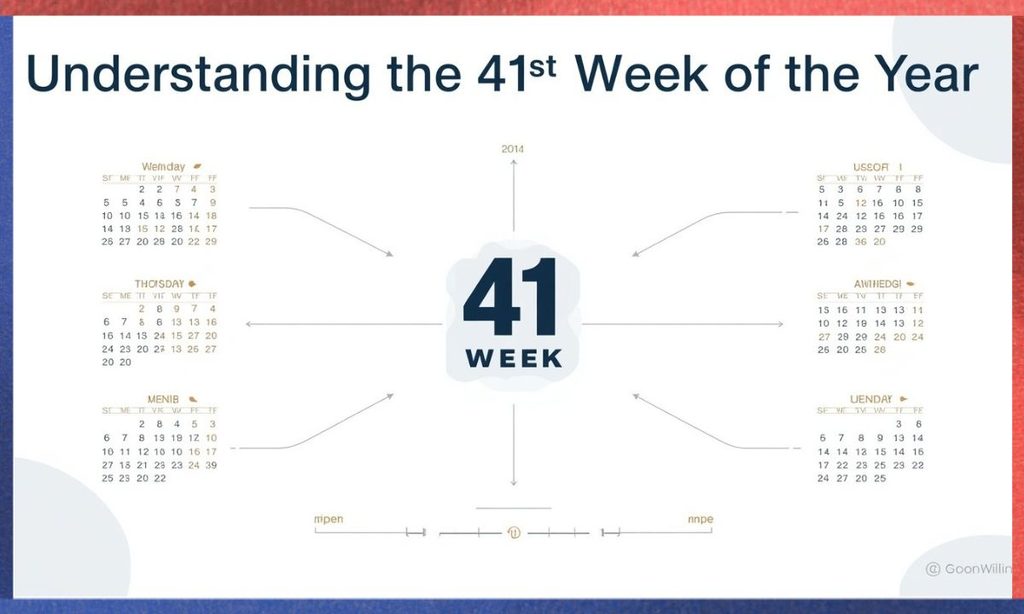
October 5, 2026, falls in the 41st week of the year according to the ISO week-date system. This system numbers weeks from 1 to 52, or sometimes 53, depending on the year.
The ISO standard treats Monday as the first day of the week. Week 1 is the week containing the first Thursday of the calendar year. Using this convention, October 5 belongs to ISO week 41.
Week numbers are especially useful in business and administration. A company might label a project report as Week 41, while a manufacturer might organize production schedules using the same system.
However, not every calendar or country uses identical week-numbering rules, so the standard matters when comparing records.
If you encounter a different week number in another application, check whether it uses ISO weeks or a regional convention. The date itself remains October 5, even if a different numbering system labels its week differently.
What Is the 278th Day of the Year 2026?
October 5, 2026, is the 278th day of the year. Since 2026 is not a leap year, it contains 365 days.
You can verify this by adding the days in the months before October and then adding October 5:
- January: 31 days
- February: 28 days
- March: 31 days
- April: 30 days
- May: 31 days
- June: 30 days
- July: 31 days
- August: 31 days
- September: 30 days
- October: 5 days
The total is 278 days.
This number is called the day of the year or ordinal date. It gives each calendar date a position between 1 and 365 in a non-leap year. It can be useful in scientific records, data processing, annual planning, and systems that need to compare dates without repeatedly writing month names.
How Many Days Were Left in 2026 on October 5?
After October 5, 2026, there were 87 days remaining until the end of the year, counting October 6 through December 31.
The calculation is:
- Remaining days in October after October 5: 26
- Days in November: 30
- Days in December: 31
Adding these numbers gives 87 days.
If you count October 5 itself as one of the days in the period, the total becomes 88 days, including the starting date. This distinction explains why some date calculators may display different totals depending on whether they count the beginning date.
The difference is small, but it matters when preparing schedules or calculating inclusive date ranges. When reporting remaining days, always clarify whether the starting day is included.
What Percentage of 2026 Had Passed by October 5?
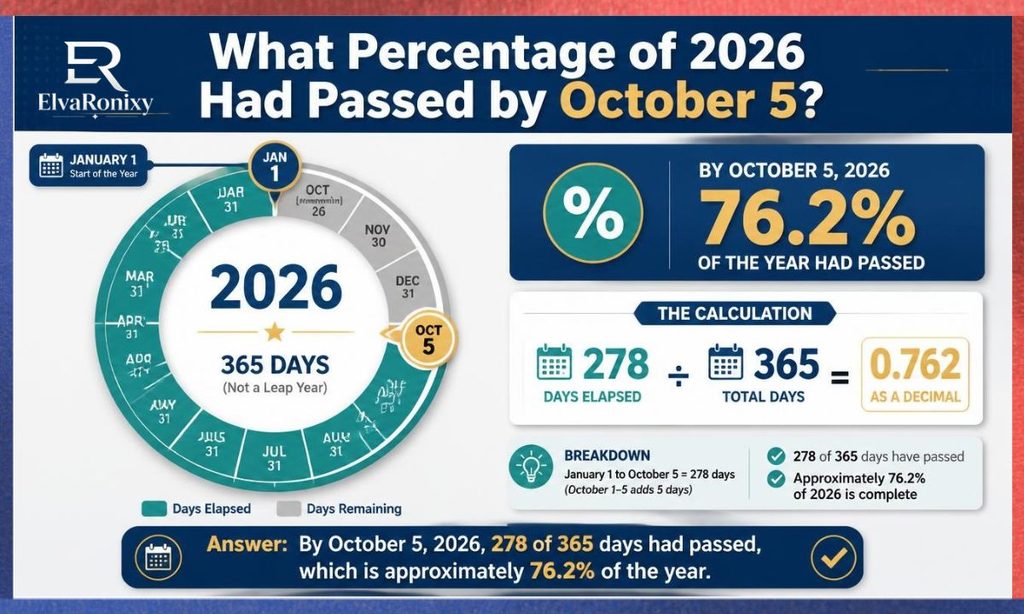
By October 5, 2026, approximately 76.16% of the year had elapsed, when counting October 5 as day 278.
The calculation is:
\[ \frac{278}{365}\times100\approx76.16\% \]
This means that more than three-quarters of the calendar year had passed by that date. Around 23.84% remained, using the same elapsed-day convention.
Year-progress calculations can help with annual goals, project planning, personal milestones, and reviewing how much time remains before December.
For example, if someone set a yearly learning goal in January, October can be a useful moment to review their progress and adjust their plans.
Remember that this percentage measures the position of the date within the calendar year. It does not measure how much of a person’s work, goals, or projects should have been completed.
Using an Online Date Calculator to Find Past Dates
A Date Calculator can perform the subtraction automatically, which is especially convenient when you need to calculate dates repeatedly. A reliable online date calculator can help you find past dates, calculate future dates, and measure the number of days between two calendar points.
Here is a simple way to use one:
- Open a date calculator tool.
- Enter the starting date, such as October 26, 2026.
- Select the option to subtract time or calculate a past date.
- Enter three weeks, or enter 21 days.
- Review the calculated date and weekday.
Some tools also offer a date and time calculator, allowing you to work with hours, minutes, or specific timestamps. For basic calendar calculations, however, you generally only need the starting date and the duration.
A service such as timer.live may be useful for exploring date-related calculations. Always review the displayed starting date and the tool’s counting method to make sure the result matches your needs.
Calculate Date 3 Weeks Ago for Any Starting Date
The same method works for any starting date, whether you are looking at a date in January, June, or December. The key is to subtract 21 calendar days rather than trying to move back to the same day number in a previous month.
For example:
| Starting date | Date 3 weeks earlier |
|---|---|
| October 26, 2026 | October 5, 2026 |
| October 20, 2026 | September 29, 2026 |
| January 15, 2026 | December 25, 2025 |
| March 1, 2026 | February 8, 2026 |
| December 10, 2026 | November 19, 2026 |
These examples demonstrate how the calculation can cross month and year boundaries. January 15, for example, takes you into the previous year when you subtract 21 days.
For an accurate custom date calculation, enter the exact starting date instead of relying on memory. That small habit can prevent mistakes when dealing with appointments, invoices, travel plans, or important personal events.
Why Calculating Past Dates Is Useful in Everyday Life
Knowing how to calculate dates 3 weeks before today is not only about satisfying curiosity. The result can help you organize information and make decisions with a clearer sense of time.
Work and Project Planning
Suppose you began a project three weeks ago and want to check the original kickoff date. Subtracting 21 days gives you a useful starting point for reviewing milestones, meeting notes, and completed tasks.
Health and Personal Records
People sometimes need to organize appointment histories, routine records, or personal schedules by date. A calendar calculation can help identify the relevant period, although any medical decisions should rely on appropriate professional guidance rather than date arithmetic alone.
School and Study Schedules
Students may use past-date calculations to locate assignment announcements, track study sessions, or review the start of a learning plan. Knowing the exact date is more reliable than estimating that something happened about a month ago.
Bills and Administrative Deadlines
An invoice, notice, or confirmation might refer to an event that happened several weeks earlier. Finding the exact date can make it easier to organize paperwork and check relevant deadlines.
Always verify the rules that apply to the particular deadline, since some administrative periods use business days rather than calendar days.
Common Mistakes When Calculating Three Weeks Ago
Although the calculation is straightforward, a few common errors can lead to the wrong answer.
- Confusing three weeks with one month: Three weeks equals 21 days, while a calendar month can contain 28, 29, 30, or 31 days.
- Counting the starting date as day one: Standard date subtraction measures the elapsed duration between dates. Inclusive counting can produce a different total.
- Forgetting month boundaries: Subtracting days near the beginning of a month may take you into the previous month.
- Ignoring leap years: February has 29 days in leap years and 28 in ordinary years. This matters when a calculation crosses February.
- Using an inconsistent week-numbering system: ISO week numbers and some regional calendar systems may differ.
A good way to avoid these errors is to calculate the total duration first, subtract the days, and then verify the result on a calendar. It takes only a moment and can save you from unnecessary confusion.
Frequently Asked Questions
3 weeks ago from today
Three weeks ago from October 26, 2026, was October 5, 2026, which fell on a Monday.
what day was it 3 weeks ago
Three weeks ago was Monday, October 5, 2026.
what is 3 weeks ago from today
Three weeks ago from today was October 5, 2026, exactly 21 days before October 26, 2026.
3 weeks ago
Three weeks ago means 21 days in the past. From October 26, 2026, the date was October 5, 2026.
what day was 3 weeks ago
The day three weeks ago was Monday, October 5, 2026.
Read This Blog:https://elvaronixy.com/4-weeks-ago-from-today/
Conclusion
Finding 3 Weeks Ago From Today is simple once you understand the relationship between weeks and days.
Starting from October 26, 2026, subtracting 21 days leads to Monday, October 5, 2026. The date falls in ISO week 41, is the 278th day of the year, and leaves 87 days remaining after it until the end of 2026.
Whether you are checking an old message, organizing a project, reviewing a calendar, or planning an upcoming deadline, a basic date calculation can make everyday tasks much easier.
Use a calendar or a reliable online date calculator when you need to verify a result, especially when the calculation crosses months or years.
And if you have a useful trick for remembering dates or keeping track of important events, share it in the comments. Sometimes the simplest calendar habits are the ones that save us the most time.