
If you have ever looked back at a calendar and wondered what was happening eight weeks earlier, you are not alone.
Maybe you are checking an old appointment, remembering when a project began, reviewing a school schedule, or simply trying to work out how much time has passed.
Dates can feel a little confusing when weeks turn into months, but the calculation is actually quite simple once you know where to begin.
8 Weeks Ago From Today was Saturday, August 29, 2026. Since today is Saturday, October 24, 2026, going back eight full weeks means subtracting 56 days from the current date.
It takes you right back to the final days of August, when summer was slowly giving way to the next season in many parts of the world.
In this guide, we will explore the exact date, its calendar details, how to calculate previous dates manually, and how an online date calculator can make the process easier.
You will also find useful examples and answers to common questions, so you can calculate dates confidently whenever you need to.
| Calculation | Result |
|---|---|
| Today’s Date | October 24, 2026 |
| 8 Weeks Ago | August 29, 2026 |
| Days in 8 Weeks | 56 Days |
| Day of the Week | Saturday |
| Calculation | October 24, 2026 − 56 Days |
What Date Was 8 Weeks Ago From Today?
The date 8 Weeks Ago From Today was Saturday, August 29, 2026. Eight weeks is equal to 56 days, which means the calculation involves moving backward by exactly 56 calendar days.
Here is a quick overview of the result.
| Date calculation detail | Answer |
|---|---|
| Today’s date | Saturday, October 24, 2026 |
| Number of weeks counted backward | 8 weeks |
| Equivalent number of days | 56 days |
| Date 8 weeks ago | Saturday, August 29, 2026 |
| Day of the week | Saturday |
| Month | August |
| Year | 2026 |
| Week of the year | 35th week |
| Day of the year | 241st day |
| Days remaining after August 29 | 124 days |
One important calendar detail deserves attention: August 29, 2026, is the 241st day of the year, with 124 days remaining after that date until December 31. These figures use the standard day-of-year convention, which counts January 1 as day one.
Knowing the exact date is useful for all sorts of everyday situations.
You might be checking when you started a course, comparing two project milestones, reviewing a payment record, or trying to remember the weekend when something important happened. A small calculation can clear up a surprisingly big question.
Understanding What 8 Weeks Ago Means
When someone says “eight weeks ago,” they mean a point in time exactly eight weeks before the reference date. The reference date matters because the answer changes every day.
For the current example, the reference date is October 24, 2026. Subtracting eight weeks gives August 29, 2026.
The calculation works like this:
- One week contains 7 days.
- Eight weeks contain \(8 \times 7 = 56\) days.
- October 24, 2026, minus 56 days equals August 29, 2026.
This is called calendar date subtraction. It is different from simply counting back two months, because months have different lengths. Two calendar months before October 24 would be August 24, while eight weeks before October 24 is August 29.
That five-day difference might not matter when recalling a general memory, but it can matter when calculating a deadline, tracking a schedule, or checking an official record. Weeks are fixed units of seven days, whereas calendar months vary in length.
Calendar Details for Saturday, August 29, 2026
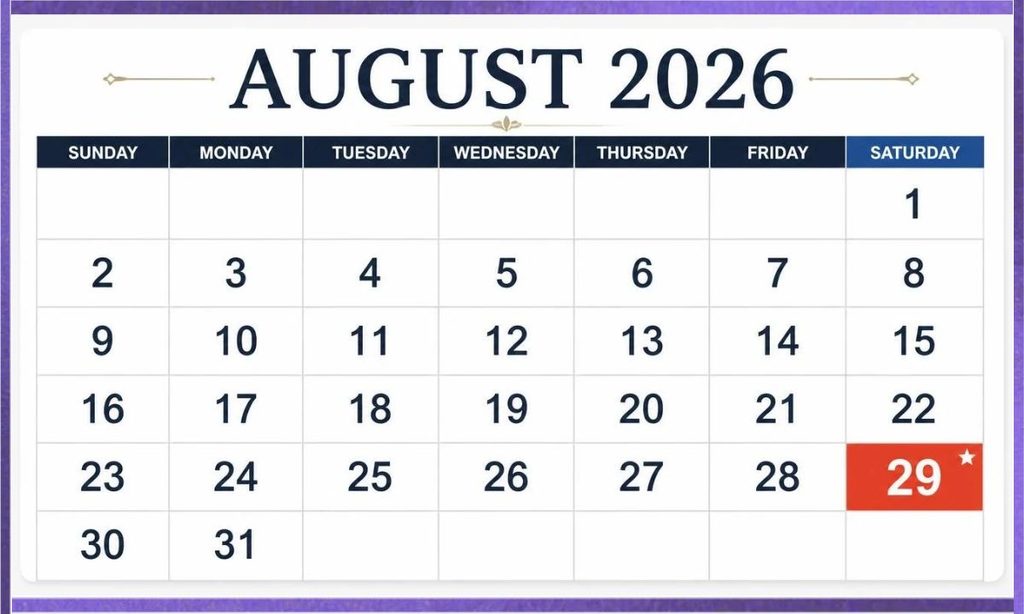
Key facts about the calculated date
AUG
29
2026
Saturday, August 29
8 weeks before October 24, 2026
56 days earlier
Week number
35
Day of the year
241
Days remaining in 2026
124
Year completed
About 65.75%
August 29 falls on a Saturday, making it a weekend date. For many people, a Saturday is convenient for family gatherings, personal appointments, trips, and activities that are difficult to fit into a working week.
The date also falls in the 35th week of 2026 under the ISO week-numbering system, which starts weeks on Monday and assigns week one according to the first week containing a Thursday.
Week-numbering systems can differ, so a calendar or date tool may occasionally display a different week number depending on its settings.
By August 29, approximately 65.75% of the year had elapsed when measured as 241 out of 365 calendar days. There were 124 days after August 29 before the end of the year. These details offer a broader picture of where the date sits in the annual calendar.
How to Calculate 8 Weeks Ago From Today
You do not need a special tool to calculate a past date. A simple multiplication and a little calendar counting will usually do the job.
Step 1: Convert Weeks Into Days
Start by remembering that every standard week contains seven days. Multiply the number of weeks by seven to find the equivalent number of days.
For eight weeks:
\[ 8 \times 7 = 56 \text{ days} \]
So, 8 weeks equals 56 days. This conversion is the foundation of the entire calculation, and it works for any date you want to count backward from.
Step 2: Start With the Current Date
Our starting point is October 24, 2026. Write down the day, month, and year before subtracting anything, because getting the starting date right prevents confusion later.
You can use a wall calendar, your phone’s calendar app, or a simple paper planner. The method doesn’t need to be fancy; it just needs to be accurate.
Step 3: Count Backward Across the Months
October 24 is 24 days into October. Going back 24 days takes you to September 30, and another 32 days backward takes you to August 29.
The full calculation can be expressed as:
- October 24 minus 24 days = September 30.
- September 30 minus 32 days = August 29.
- Total days subtracted = 24 + 32 = 56 days.
This approach works because September has 30 days, and the calculation crosses the boundary between two months. Month boundaries often cause mistakes when people try to subtract weeks mentally, so breaking the calculation into smaller pieces can be helpful.
Step 4: Verify the Day of the Week
Eight weeks contain exactly eight seven-day cycles. Therefore, the day of the week stays the same when you move backward by eight full weeks.
October 24, 2026, is a Saturday, so August 29, 2026, is also a Saturday. This gives you a useful cross-check without needing to count each weekday individually.
Using an 8 Weeks Ago Date Calculator
A past date calculator can save time when you regularly need to work with dates. Instead of counting backward on a calendar, you enter a starting date, choose the number of weeks or days, and let the tool calculate the result.
For example, the Timer.Live Date Calculator is an online option for exploring date calculations.
A typical 8 weeks ago date calculator workflow looks like this:
- Enter the reference date, such as October 24, 2026.
- Choose the option to subtract time or calculate a past date.
- Enter eight weeks, or enter 56 days if the tool uses days.
- Run the calculation.
- Check the resulting date and weekday.
Some tools also show the number of days between dates, the weekday, or additional calendar details. Available features depend on the particular calculator, so check the displayed settings before relying on its result.
An online calculator is especially useful when the starting date is several months or years away from the current date. It can also help with planning appointments, checking project milestones, and calculating a date in the past without manually navigating multiple calendar pages.
Why Eight Weeks Is Not Exactly Two Months
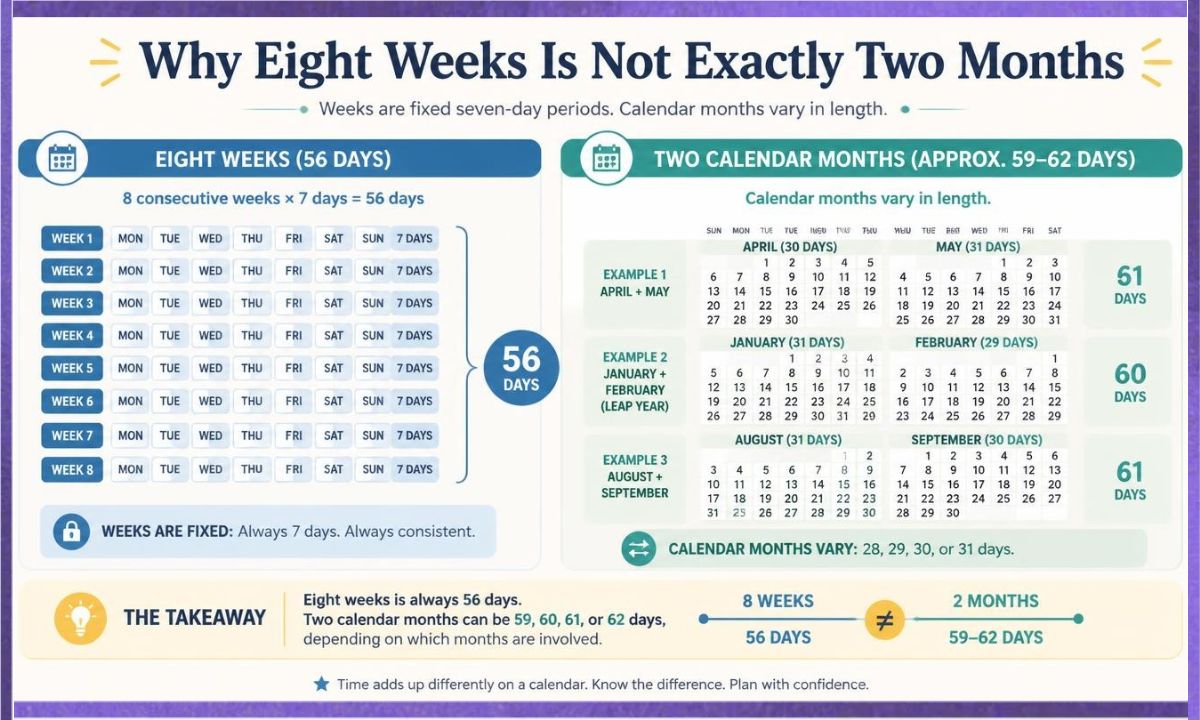
It is common to assume that eight weeks and two months mean the same thing, but they are not interchangeable.
Eight weeks always equals 56 days. Two calendar months can cover 59, 60, 61, or 62 days depending on the months and dates involved.
For example, counting back two calendar months from October 24, 2026, gives August 24, 2026. Counting back eight weeks gives August 29, 2026.
| Time period | Calculation | Result |
|---|---|---|
| 8 weeks | 8 × 7 days | 56 days |
| 2 calendar months before October 24 | Subtract two months | August 24, 2026 |
| 8 weeks before October 24 | Subtract 56 days | August 29, 2026 |
| 4 weeks | 4 × 7 days | 28 days |
This distinction becomes particularly important when dealing with recurring appointments, subscriptions, school terms, or project timelines.
If an instruction says “eight weeks,” count seven-day periods. If it says “two months,” use calendar months unless the instructions define the period differently.
Practical Reasons to Calculate a Date 56 Days Ago
Looking backward by eight weeks is useful for more than satisfying curiosity. It can help you organise information, review past activities, and understand how much time has passed between important events.
Tracking Projects and Work
Suppose you began a project around the end of August and want to review its progress eight weeks later. Knowing that August 29, 2026, was eight weeks before October 24 gives you a clear starting point for comparing milestones.
You can use the date to review completed tasks, check meeting notes, or work out when a particular stage began. It is a simple way to put progress into perspective without relying on memory alone.
Reviewing School and Study Schedules
Students may need to look back at when a course started, when a project was assigned, or when they began preparing for an examination. Calculating a date eight weeks earlier provides a useful reference point for planning and reviewing their study routine.
For instance, if a study plan was created on October 24, counting backward eight weeks identifies August 29 as the comparison date. It doesn’t tell you what happened that day, of course, but it gives you a reliable date to check against your notes.
Remembering Personal Events
Sometimes a date calculation begins with a small question: Was that family gathering in August or September? Did an event happen before a particular appointment? Was a photograph taken roughly eight weeks ago?
A date calculator can narrow down the answer. You can then compare the result with messages, photographs, or calendar entries to identify the actual event.
Checking Records and Deadlines
Date calculations can also help you review invoices, purchase records, appointments, and other documents.
However, if a legal, financial, or official deadline depends on a specific rule, confirm how that deadline is defined. Some rules exclude the starting day, adjust for holidays, or use calendar months instead of fixed periods of days.
A simple past-date calculation is helpful, but the rules attached to a particular deadline always come first.
Understanding the 2026 Calendar and Year Progress
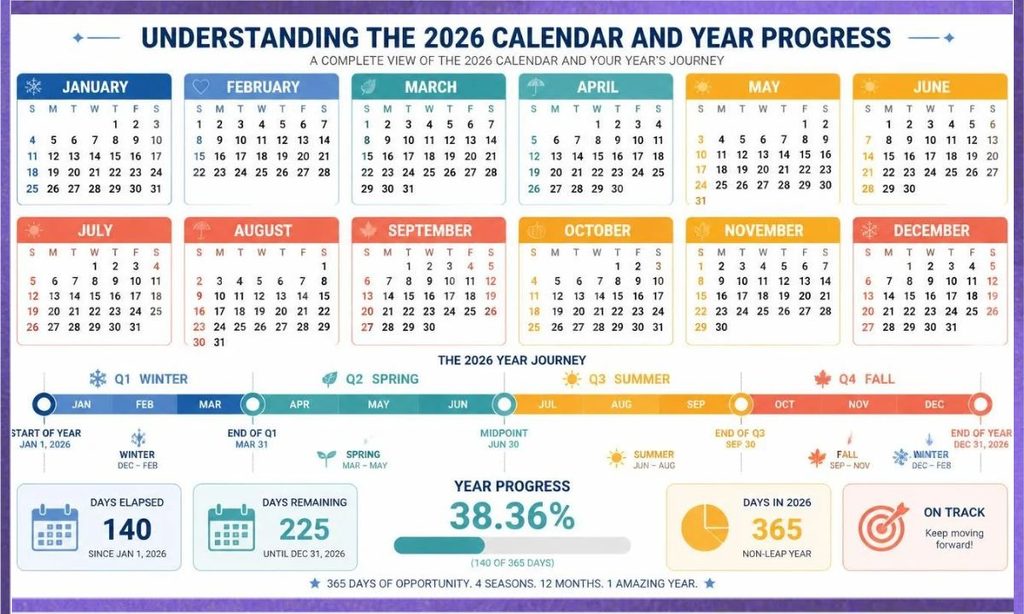
August 29, 2026, falls toward the end of summer in the Northern Hemisphere and during the late-winter period in much of the Southern Hemisphere. Seasons vary by location, which is why the same date can feel completely different depending on where you live.
From a calendar perspective, the date provides a useful snapshot of the year. August is the eighth month, and August 29 is the 241st day of 2026. Since 2026 is not a leap year, it contains 365 days.
To estimate the percentage of the year completed on August 29, divide the day number by the number of days in the year:
\[ \frac{241}{365}\times100 \approx 66.03\% \]
So, approximately 66.03% of 2026 had elapsed by August 29, using the day-of-year method. This differs slightly from calculations that measure only the fully elapsed days before that date, which is why the method should be stated clearly.
There were 124 days remaining after August 29 before December 31. This kind of information can be useful for annual planning, personal goals, business reviews, or simply understanding how far along the calendar has moved.
Common Mistakes When Calculating Dates in the Past
Even straightforward calendar calculations can become confusing if you use the wrong method. A few simple checks will help you avoid the most common errors.
- Confusing weeks with months: Eight weeks always means 56 days, not two calendar months.
- Forgetting the starting date: Make sure you know which date the calculation begins from.
- Counting the starting day twice: Subtracting 56 days is different from counting the reference date as the first day of a 56-day list.
- Ignoring month lengths: October, September, and August do not all contain the same number of days.
- Mixing up week-number systems: ISO week numbering and other calendar conventions may produce different week labels.
- Assuming every year has 365 days: Leap years contain 366 days, so day-of-year and year-progress calculations need to account for February 29.
For this example, the most reliable result is straightforward: October 24, 2026, minus 56 days equals Saturday, August 29, 2026.
Frequently Asked Questions
8 weeks ago from today
Eight weeks ago from today was August 29, 2026 (Saturday), exactly 56 days before October 24, 2026.
8 weeks ago
Eight weeks ago means 56 days in the past. The exact date depends on the current day.
what day was it 8 weeks ago
Eight weeks ago from October 24, 2026, was Saturday, August 29, 2026.
8 weeks from yesterday
Eight weeks from yesterday, October 23, 2026, will be Friday, December 18, 2026.
what day was 8 weeks ago
Eight weeks ago was Saturday, August 29, 2026, which is 56 days before October 24, 2026.
Read This Blog:https://elvaronixy.com/2-weeks-from-today/
Conclusion
Finding 8 Weeks Ago From Today is a simple calculation once you know the starting date and understand how weeks convert into days.
With October 24, 2026, as the reference date, moving backward by eight weeks means subtracting 56 days, giving you Saturday, August 29, 2026.
Whether you are reviewing a project, checking an appointment, remembering a personal event, or planning a future schedule,
understanding calendar date calculation can make everyday organisation much easier. You can work it out manually, use your calendar app, or rely on an online date calculator when you need a quick answer.
One final tip: always double-check whether a task asks for weeks, calendar months, or a specific number of days. That small detail can make a meaningful difference when accuracy matters.
If you have a useful way to remember past dates or a favourite calendar tool, share your experience in the comments. Your tip might make someone else’s next date calculation a little easier.