

Sometimes a date looks like just a number sitting quietly on a calendar, but then you realize it is attached to something you are waiting for.
A birthday, a family celebration, a school event, a trip, a deadline, or even the day you finally plan to send a special message to someone. If Today is September 18, 2026, then 100 Days From Today lands on December 27, 2026.
It sounds far away at first, but 100 days can disappear surprisingly quick, almost like a page turning when nobody is watching.
Knowing the exact date can make future plans feel much more real. Instead of saying “sometime near the end of December,” you can point to December 27, 2026, circle it, save it on your phone, and actually know where the waiting ends.
This is especially handy when you’re planning celebrations, sending invitations, preparing gifts, arranging travel, or simply wondering what the calendar will look like after a certain number of days from today.
| Calculation | Result |
|---|---|
| 100 days from today | December 27, 2026 |
| 100 days | 14 weeks + 2 days |
| Total hours | 2,400 hours |
| Total minutes | 144,000 minutes |
What Is 100 Days From Today?
The answer is December 27, 2026, when counting 100 calendar days forward from September 18, 2026. In other words, if September 18 is your starting point, adding 100 complete days takes you to December 27, not some mysterious “late December” zone.
A simple way to understand the calculation is to break it into the remaining days of September, followed by October, November, and December.
September has 30 days, and after September 18 there are 12 days remaining when the starting day itself isn’t counted. Then October contributes 31 days and November adds another 30.
The remaining days carry the calculation into December, where the answer becomes December 27. Calendars can make this look easier than the arithmetic feels, which is one reason online calculators are useful.
So if someone asks, what is 100 days from today, and the starting date is September 18, 2026, the straightforward answer is December 27, 2026. A tiny date question, really, but useful for a surprising number of plans.
100 Days From Today Date: December 27, 2026
The 100 days from today date is December 27, 2026. This is a future calendar date calculated by moving exactly 100 days forward from September 18, 2026, rather than estimating the date by months.
That distinction matters because months don’t all contain the same number of days. One month might have 28 days, another 30, and another 31, so saying “about three months later” isn’t the same thing as performing an exact future date calculation. When a deadline matters, “about” is usually the least helpful word in the room, honestly.
If you’re using the result for a birthday, anniversary, appointment, project milestone, or family event, write the full date down as December 27, 2026. It removes the little bit of calendar confusion that tends to appear when people count dates differently.
How to Calculate 100 Days From Today
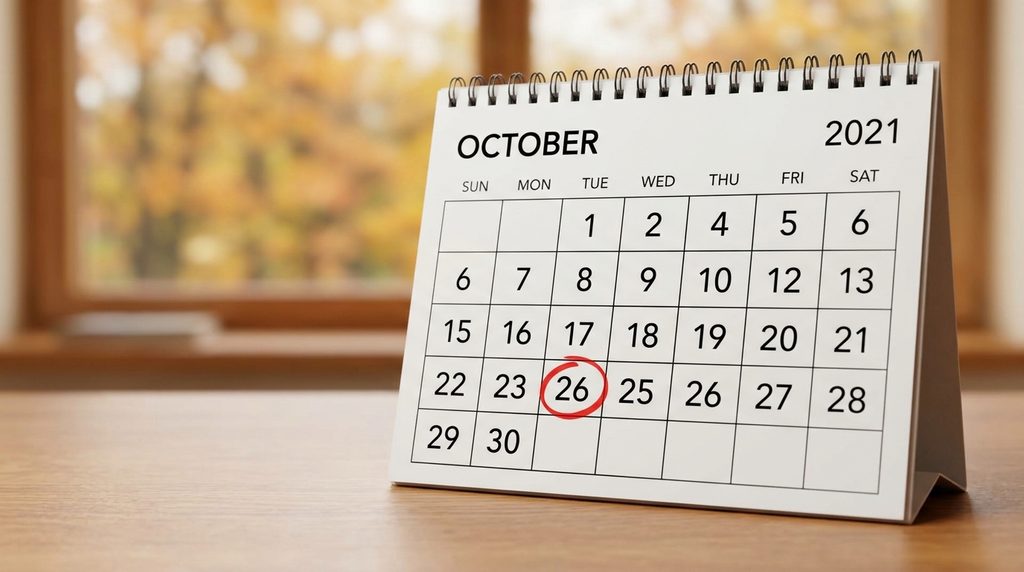
Learning how to calculate 100 days from today is quite simple once the calendar is treated as a sequence of individual days.
Start with September 18, 2026, then move forward 100 calendar days while remembering that the starting date is normally day zero in this kind of calculation.
You can also use a Date Calculator to avoid manual counting. Enter today’s date, select the option to add days, type 100, and the tool gives you the resulting future date.
This method is especially convenient when the interval becomes larger, because counting 147 or 263 individual calendar squares by hand gets boring very fast, and nobody needs that kind of calendar drama.
A Simple Date Calculator can also handle other intervals. Instead of only using 100 days, you can enter 30 days ahead, 60 days ahead, 90 days ahead, 120 days ahead, or 150 days ahead and compare how the calendar changes. This is useful when you’re planning several milestones rather than just one.
What Date Will It Be 100 Days From Today?
If you’re asking what date will it be 100 days from today, using September 18, 2026 as today’s date, the result is December 27, 2026. That date falls toward the end of the year, which can make it useful for people organizing end of year celebrations or looking ahead to the final stretch of 2026.
There is also a small but important difference between 100 days from today and “100 days after today” in casual conversation.
Most date calculators interpret the request as adding 100 days to the starting date, while inclusive counting can sometimes produce a different result.
When accuracy matters, always check which counting method you’re using, otherwise two perfectly confident people can somehow produce two different calendars.
Using a Date Calculator for Future Dates
A date calculator saves time when you need to calculate future dates without manually moving through a calendar. You can usually choose a starting date, select whether you want to add days or subtract days, and enter the number of days required.
For example, starting from September 18, 2026, adding 100 days gives December 27, 2026. Starting from the same date and asking for 30, 60, or 90 days produces earlier points along the same timeline. It becomes a neat little map of where you’re going, rather than just one isolated answer.
Some tools also work with weeks and months, allowing users to calculate date intervals in different ways. A request such as “8 weeks from today” isn’t quite the same calculation as “2 months from today,” because weeks represent fixed seven day periods while calendar months vary in length.
Days Ahead and Days Ago: Understanding Relative Dates
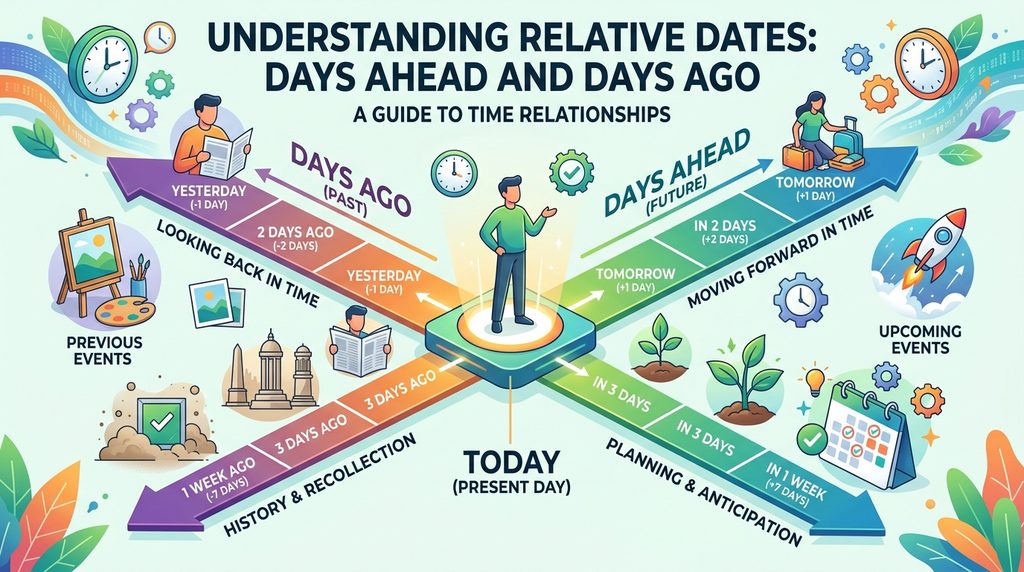
People often search for days ahead and days ago because relative dates are easier to describe than full calendar dates in everyday speech. Saying “the meeting is 10 days from today” is often more natural than immediately naming the date, especially when you’re chatting with family or friends.
A relative date calculator works in both directions. You can calculate a future date by adding days, or use a days ago calculator to find an earlier date.
For example, you might want to know the date 30 days ago, 60 days ago, 90 days ago, 120 days ago, or 150 days ago. Each calculation moves backward from the chosen starting point.
This becomes useful when checking records, remembering when something happened, or comparing two events. The calendar is basically a giant conversation between “before” and “after,” which sounds philosophical for something that mostly sits on a wall, but there it is.
Comparing 30, 60, 90, 120, and 150 Days Ahead
Looking at several date intervals together can give a better sense of how quickly time moves. From September 18, 2026, 30 days ahead takes you into October, while 60 days ahead moves into November. Ninety days ahead approaches December, and 120 and 150 days ahead carry the timeline into early 2027.
This approach is handy for long-term planning. A student might use 30-day milestones for study goals, a family may use 90 days for event preparation, and someone working on a project could divide a 150 day schedule into smaller sections. The exact purpose changes, but the underlying date calculation stays the same.
Thinking in intervals can also make a large goal less intimidating. One hundred days sounds enormous when you say it quickly, but split it into smaller sections and suddenly it feels like a collection of ordinary mornings, afternoons, busy days, lazy Sundays, and “where did this week go?” moments.
Why December 27, 2026 May Matter for Planning
Because December 27, 2026 arrives close to the end of the year, it may be relevant to holiday plans, family gatherings, vacations, financial deadlines, or personal milestones. The date itself doesn’t carry a universal meaning, but its position in the calendar can make it useful for planning.
Families sometimes use late December to continue celebrations after major holiday gatherings have passed. A baby girl’s arrival, a child’s first hundred days, a family reunion, or a delayed birthday celebration might all give the date a special personal meaning. The calendar provides the number, but people provide the story behind it.
If you’re preparing a message for someone, a little personalization can make it much warmer.
Instead of simply saying “Congratulations,” mention what the occasion means to the family and why the upcoming date matters. A plain date can become a memory once somebody gives it a little heart.
Historical Events Within 100 Days
A 100-day period is long enough to contain a remarkable collection of historical events and historical moments. Looking backward can make a future date feel less abstract, because every day on the calendar eventually becomes part of someone’s history.
For example, the Little Rock Nine entered Central High School in Little Rock, Arkansas, in 1957 during the Civil Rights Movement, following the legal changes associated with Brown v. Board of Education.
President Dwight D. Eisenhower sent the 101st Airborne Division to help enforce federal authority. It is one of those dates in history where a calendar entry represents a much bigger struggle over equality and public education.
Other historical moments occurred far from American civil rights history. Christopher Columbus reached islands in the Bahamas after crossing the Atlantic Ocean in 1492, beginning exchanges that became part of what historians call the Columbian Exchange.
The consequences extended across continents and centuries, making one voyage much bigger than the little line it might receive in a timeline.
The Cuban Missile Crisis in 1962 brought the United States, Cuba, and the Soviet Union into a dangerous confrontation. The discovery of nuclear missile sites in Cuba, along with the role of a U-2 spy plane, contributed to the crisis involving John F. Kennedy and Soviet leader Nikita Khrushchev.
Turkey also mattered to the wider strategic situation because U.S. missiles were stationed there. History, as usual, was not especially interested in keeping things simple.
December Historical Moments and the Passing of Time
December has witnessed many important events, including moments connected to World War II, political change, scientific progress, and social movements. Looking at such events reminds us that dates aren’t merely numbers; they can become markers that later generations use to understand enormous changes.
The history of Prohibition, for instance, involved the 18th Amendment and the Volstead Act, followed eventually by the 21st Amendment, which repealed national Prohibition.
The period is associated with organized crime, bootlegging, and speakeasies, while the later repeal showed how laws can change when society and politics change. A date calculator won’t explain any of that, but it can help you locate the dates on the historical timeline.
The Great Depression also transformed American economic and social life following the stock market crash commonly associated with Black Tuesday in 1929.
Years later, political history included the presidential election contest between Barack Obama and John McCain, demonstrating again how very different stories can occupy neighboring pages of the same calendar.
From the Berlin Wall to American Democracy
The Berlin Wall became a major symbol of the Cold War, separating East Germany from areas including West Berlin. Its opening in 1989 helped lead toward German reunification, while the broader collapse of Soviet influence reshaped European political history.
Earlier American history contains its own memorable calendar points.
The Mayflower Compact, associated with the Mayflower and the Pilgrims near Cape Cod, is often discussed in connection with early ideas about self government and American democracy.
These events are separated by centuries, yet a date calculator can place each of them onto the same simple timeline. Thats the slightly strange magic of calendars.
Another well-known date concerns President John F. Kennedy, who was assassinated in Dallas, Texas, in 1963. Dealey Plaza, Lee Harvey Oswald, and Vice President Lyndon B. Johnson became part of the historical record surrounding that event. It remains one of the most studied moments in modern American political history.
Civil Rights, War, and Aviation History

The Civil Rights Movement also includes the story of Rosa Parks in Montgomery, Alabama, and the Montgomery Bus Boycott, which became a major event in the struggle against racial segregation.
Martin Luther King Jr. emerged as an important civil rights leader during this period, and the movement eventually contributed to major changes in American law and public life.
Military history has its own calendar markers. The attack on Pearl Harbor in Hawaii in 1941 brought the United States directly into World War II. The date became a defining moment in American history, and its consequences extended far beyond the location where the attack occurred.
Aviation history offers a completely different kind of milestone. Orville Wright and Wilbur Wright, known as the Wright brothers, achieved the first powered flight at Kitty Hawk, North Carolina, in 1903. That early flight lasted only briefly, but it helped open the door to modern aviation.
Sometimes a tiny event really does create a giant future, which is a nice thought when you’re looking at a future date.
Later aviation history includes Pan Am Flight 103, which was destroyed over Lockerbie, Scotland, in 1988. The event became a major case in discussions of aviation terrorism and international security. It is another reminder that historical timelines contain both hopeful achievements and deeply painful moments.
Political and Global History on a Calendar
The final years of the Cold War brought major changes involving Mikhail Gorbachev, the Soviet Union dissolution, and political developments around the Kremlin.
These events changed the shape of international relations and marked the end of one of the most important geopolitical periods of the twentieth century.
The Boston Tea Party is another familiar entry in American history. Protesters objected to taxation and commercial policies involving the Tea Act and the East India Company, with tea famously dumped into Boston Harbor.
The event became part of the chain of developments leading toward the American Revolution.
When you look at all these significant historical events, the lesson isn’t that every 100 day period will contain a world changing event. Rather, it’s that ordinary looking dates can later become historically important.
Today’s blank square can become tomorrow’s history book paragraph, which is a little humbling if you think about it too long.
How a 100 Day Timeline Can Help With Personal Goals
A 100-day period can be divided into smaller checkpoints, making it useful for personal planning. You could create milestones at 30, 60, 90, and 100 days, giving yourself several moments to review progress instead of waiting until the final date.
For a family event, this could mean planning invitations first, organizing details later, and checking everything again during the final weeks.
For a school or creative project, it could mean turning a large goal into smaller weekly tasks. The exact plan depends on your situation, but the calendar gives you something concrete to work against.
If your final target is December 27, 2026, you can also mark intermediate dates on your phone or planner. These smaller markers make the future feel less like a distant cloud and more like a road with visible signposts.
Creative Ways to Use December 27, 2026

A future date can become meaningful when you attach an intention to it. Perhaps it is the day you want to celebrate a family milestone, write a letter to someone, revisit a personal goal, or organize a small gathering.
For someone welcoming a baby girl, a date can also become part of the family’s growing story. Parents may save photographs, write a short note about the baby’s early months, or prepare a keepsake for a later milestone.
A message doesn’t have to be grand or poetic to matter; sometimes “We can’t wait to celebrate this beautiful new chapter with you” is enough, and honestly, enough is often lovely.
You could also prepare several kinds of greetings depending on the relationship.
A close friend might appreciate humor, a grandparent may prefer something emotional, and a colleague may need a short and respectful congratulatory message. The best message usually sounds like it came from a person, not from a greeting-card factory having a very productive afternoon.
How to Make a Future Date Message More Personal
When mentioning December 27, 2026, avoid dropping the date into a message without context. Explain why the date matters to you. If it marks a celebration, mention the celebration; if it represents a goal, explain what you’re hoping to accomplish.
A simple formula can help without making the final message sound formulaic: mention the occasion, add a personal memory or hope, and finish with a warm thought.
For example, instead of simply saying that you are excited about an upcoming family gathering, mention something you remember from the last gathering or what you are looking forward to sharing this time.
You can also use the date as a storytelling device. “One hundred days ago this plan was only an idea, and now December 27 is sitting on the calendar” feels more personal than simply writing a number. Dates become memorable when they are connected to people, expectations, and little moments.
Why Exact Date Calculations Matter
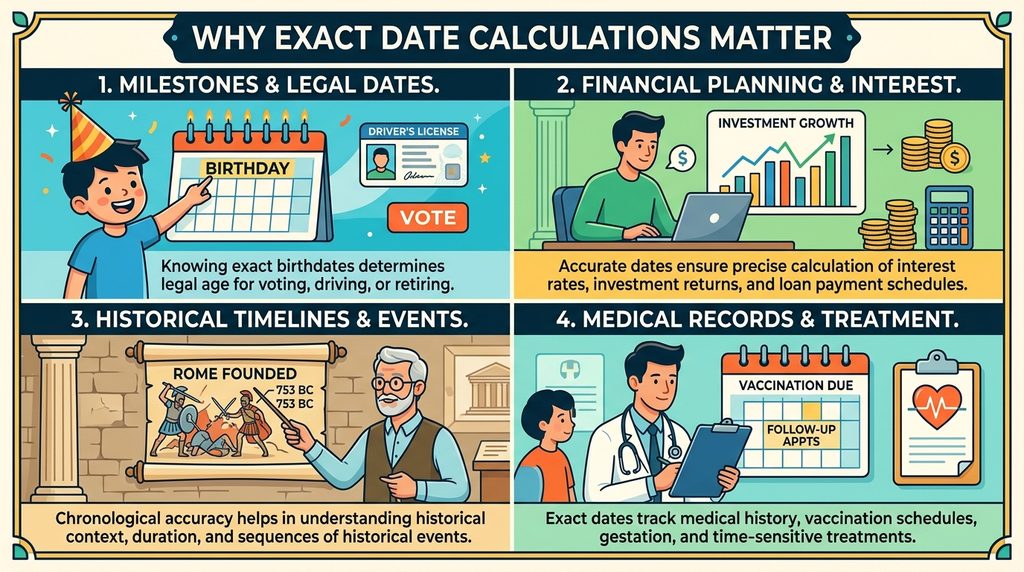
Knowing the exact date can prevent confusion when several people are coordinating schedules. A date range, deadline, reservation, event, or reminder can easily become muddled when everyone calculates from a different starting point.
An online date calculator is particularly useful when the calculation involves multiple units or when you need to compare days, weeks and months. It can also help with date difference, showing how far apart two calendar dates are.
For people who frequently work with deadlines, a calendar date calculator can become a simple everyday tool.
Instead of counting boxes manually, you enter the starting date and interval, and the calculation is done in seconds. Less counting, fewer mistakes, and more time for the actual thing you were planning.
What About Subtracting 100 Days?
Although this article focuses on moving forward, the same method works backward. Subtracting days from a date can tell you what happened a certain number of days before a chosen day.
The same calculator can therefore answer questions involving 150 days ago, 120 days ago, 90 days ago, 60 days ago, or 30 days ago. This is useful when you need to locate an earlier event, compare timelines, or understand a period in relation to today’s date.
In simple terms, adding days moves you toward a future date, while subtracting days moves you toward the past. The calculator doesn’t really care which direction you’re traveling, which is rather convenient.
Frequently Asked Questions
what is 100 days from today
100 days from today is Sunday, December 27, 2026. Use a date calculator to quickly confirm future dates.
what was 100 days ago
100 days ago from today, September 18, 2026, was Friday, June 12, 2026.
what day will it be in 100 days
In 100 days from today, it will be Sunday, December 27, 2026. This date falls exactly 100 days after September 18, 2026.
whats 100 days from now
100 days from now is December 27, 2026. You can calculate this by adding 100 days to today’s date.
what day was 100 days ago
100 days ago was Friday, June 12, 2026. This is the date you get when counting back 100 days from September 18, 2026.
Read This Blog:https://elvaronixy.com/tools-days-200/
Final Thoughts on 100 Days From Today
So, what is 100 days from today? With September 18, 2026 as the starting date, the answer is December 27, 2026. That is the date 100 days from today, calculated by moving 100 calendar days forward.
The useful part, though, is not only the answer. A future date can be a deadline, a celebration, a family milestone, a travel point, or simply a reminder that time keeps moving whether we are ready for it or not.
Using a Date Calculator or Simple Date Calculator makes these calculations quick, while understanding relative dates, date intervals, and days ahead helps you use the result confidently.
And perhaps that’s why a question as small as “what date is 100 days from today?” can be surprisingly meaningful.
Behind those 100 days are ordinary mornings, unexpected conversations, celebrations, hard work, quiet evenings, and maybe a few plans that change along the way. By the time December 27, 2026 arrives, today’s future date will simply be today.
If you’re using this calculation to plan an event, milestone, family celebration, or personal goal, consider writing down what you hope will be different by then. A calendar can tell you when the future arrives; only you can decide what you want to bring with you when it does.